AI Search Glossary: Essential Terms for the AI-Driven Search Era
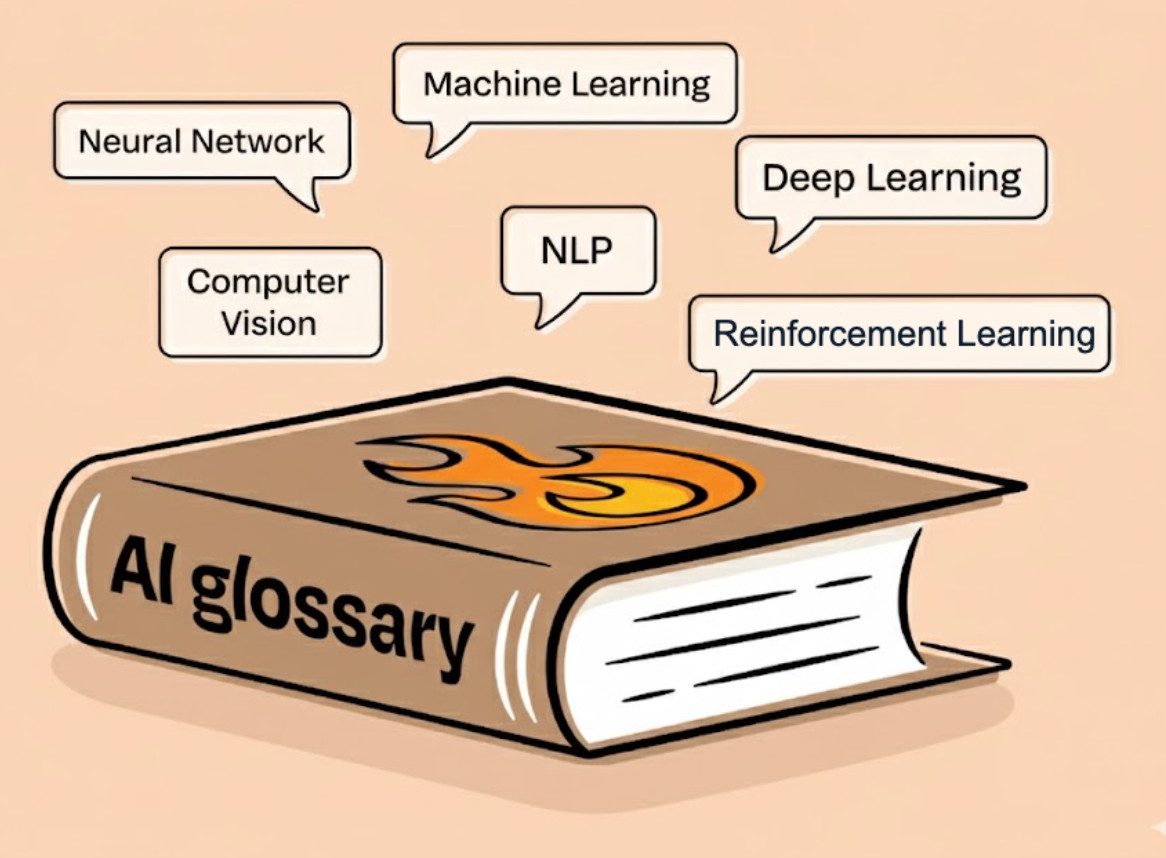
Artificial intelligence (AI) is transforming the way people search for information online. Traditional search engines that relied primarily on matching keywords are evolving into intelligent systems capable of understanding context, user intent, and natural language. As AI-driven search becomes more common, marketers, business owners, content creators, and SEO professionals need to understand the terminology shaping this new digital landscape.
Whether you’re optimizing a website, creating content, or exploring AI-powered search tools, knowing these essential terms will help you stay ahead. This glossary explains the key concepts that define the AI-driven search era.
Table of Contents
ToggleWhat Is AI-Driven Search?
AI-driven search refers to the use of artificial intelligence technologies, such as machine learning and natural language processing, to improve how search engines understand queries and deliver relevant results. Instead of relying only on keywords, AI-powered search considers context, intent, user behavior, and semantic relationships to provide more accurate and personalized answers.
Examples of AI-driven search include conversational search assistants, AI-generated summaries, voice search, and visual search.
Why Understanding AI Search Terms Matters
As search technology evolves, understanding AI terminology can help you:
- Create content that matches user intent
- Improve website visibility
- Adapt SEO strategies
- Enhance user experience
- Keep up with search engine updates
- Make informed marketing decisions
A solid grasp of these concepts ensures you’re prepared for the future of online search.
Essential AI Search Glossary
1. Artificial Intelligence (AI)
Artificial Intelligence refers to computer systems designed to perform tasks that typically require human intelligence, such as learning, reasoning, problem-solving, and language understanding.
In search, AI helps engines interpret queries and deliver more relevant results.
2. Machine Learning (ML)
Machine Learning is a branch of AI in which algorithms learn from data and improve their performance over time without being explicitly programmed for every task.
Search engines use ML to refine rankings, identify trends, and better understand user behavior.
3. Large Language Model (LLM)
A Large Language Model is an AI system trained on vast amounts of text to understand and generate human-like language.
LLMs power many conversational AI tools, helping users receive detailed answers, summaries, and recommendations instead of just links.
4. Natural Language Processing (NLP)
Natural Language Processing enables computers to understand, interpret, and generate human language.
NLP allows search engines to understand conversational queries rather than relying solely on exact keyword matches.
5. Generative AI
Generative AI creates original content such as text, images, audio, code, and videos based on user prompts.
In search, it can generate summaries, explanations, and personalized responses.
6. Search Intent
Search intent refers to the reason behind a user’s search.
The four common types include:
- Informational
- Navigational
- Transactional
- Commercial investigation
Understanding intent is essential for creating content that satisfies users’ needs.
7. Semantic Search
Semantic search focuses on the meaning behind words instead of matching exact keywords.
For example, a search engine understands that “best running shoes” and “top jogging sneakers” have similar meanings.
8. Entity
An entity is a uniquely identifiable person, place, organization, product, or concept.
Modern search engines recognize entities and understand relationships between them to improve search accuracy.
9. Knowledge Graph
A knowledge graph is a structured database of connected entities and their relationships.
It helps search engines provide rich information panels, direct answers, and related topics.
10. Vector Search
Vector search converts text into mathematical representations called vectors.
This enables AI systems to find information based on meaning rather than exact wording, improving search relevance.
11. Embeddings
Embeddings are numerical representations of words, phrases, or documents that capture their meaning and relationships.
They play a critical role in semantic search and AI retrieval systems.
12. Retrieval-Augmented Generation (RAG)
Retrieval-Augmented Generation combines AI-generated responses with information retrieved from trusted data sources.
This approach helps improve accuracy by grounding responses in relevant, up-to-date information.
13. Conversational Search
Conversational search allows users to ask questions naturally, as they would in a conversation.
Instead of typing:
“Weather Delhi”
Users can ask:
“Will I need an umbrella in Delhi this afternoon?”
AI interprets the complete meaning of the question.
14. Voice Search
Voice search enables users to perform searches using spoken language through smartphones, smart speakers, and digital assistants.
Optimizing content for natural language questions improves voice search visibility.
15. Visual Search
Visual search allows users to search using images instead of text.
AI analyzes the image and identifies similar products, objects, or locations.
16. AI Overview
An AI Overview is an AI-generated summary displayed directly in search results that answers a user’s query by synthesizing information from multiple sources.
These summaries aim to provide quick, easy-to-understand responses while often linking to supporting content.
17. Context Window
A context window is the amount of information an AI model can consider at one time when generating a response.
Larger context windows enable AI to understand longer conversations and documents more effectively.
18. Prompt
A prompt is the instruction or question given to an AI system.
Well-written prompts typically produce clearer and more useful responses.
19. Hallucination
An AI hallucination occurs when a model generates information that sounds convincing but is inaccurate, unsupported, or entirely fabricated.
Users should verify important information using reliable sources, especially in areas such as healthcare, finance, and law.
20. AI SEO
AI SEO refers to optimizing content for AI-powered search systems as well as traditional search engines.
This includes creating high-quality, authoritative, and well-structured content that answers users’ questions clearly and comprehensively.
Best Practices for AI Search Optimization
To improve your visibility in the AI-driven search era:
- Focus on user intent rather than keyword repetition.
- Write clear, comprehensive, and accurate content.
- Use descriptive headings and logical structure.
- Answer common questions directly.
- Build topical authority with related content.
- Include credible sources and factual information where appropriate.
- Optimize for mobile devices and page speed.
- Keep content updated as information changes.
These practices help both users and AI systems understand your content more effectively.
Common Misconceptions About AI Search
Several myths surround AI-powered search:
- Myth: Keywords no longer matter.
Reality: Keywords remain useful, but context and intent are equally important. - Myth: AI replaces SEO completely.
Reality: SEO continues to evolve and now emphasizes quality, expertise, and user satisfaction. - Myth: AI-generated content always ranks well.
Reality: Search systems prioritize content that is accurate, helpful, original, and valuable to users, regardless of how it is created. - Myth: AI search eliminates websites.
Reality: High-quality websites remain essential sources of information and authority.
The Future of AI-Driven Search
AI-powered search will continue to become more conversational, personalized, and context-aware. Users can expect:
- More natural interactions with search engines
- Faster and more accurate answers
- Greater use of voice and visual search
- Improved personalization based on preferences
- Enhanced multilingual search capabilities
- Better integration across devices and digital assistants
Businesses and content creators who embrace these changes will be better positioned to reach their audiences in an increasingly AI-driven digital world.
Conclusion
The AI-driven search era is reshaping how information is discovered, understood, and delivered. Concepts such as semantic search, large language models, vector search, and retrieval-augmented generation are becoming fundamental to modern SEO and digital marketing.
By understanding these essential AI search terms, you can create content that aligns with evolving search technologies, improves user experience, and remains competitive as AI continues to transform the online landscape. Staying informed and adapting your strategies today will help ensure long-term success in the future of search.

About Author
