Solumina as Manufacturing’s Operating System: Key Takeaways from Stay Sharp Episode 126
In Episode 126 of Stay Sharp, hosts Jonathan Scott and Juliann Grant return to explore iBase-t’s digital ecosystem—this time focusing on its flagship platform, Solumina.
After previously discussing the company’s origins with CEO Naveen Poonian, this episode features CTO Sung Kim, who dives deep into how Solumina functions and why it’s becoming a critical backbone for modern manufacturing—especially in aerospace and defense (A&D).
More Than Just an MES
Solumina is often labeled as a Manufacturing Execution System (MES), but according to Sung Kim, that definition barely scratches the surface.
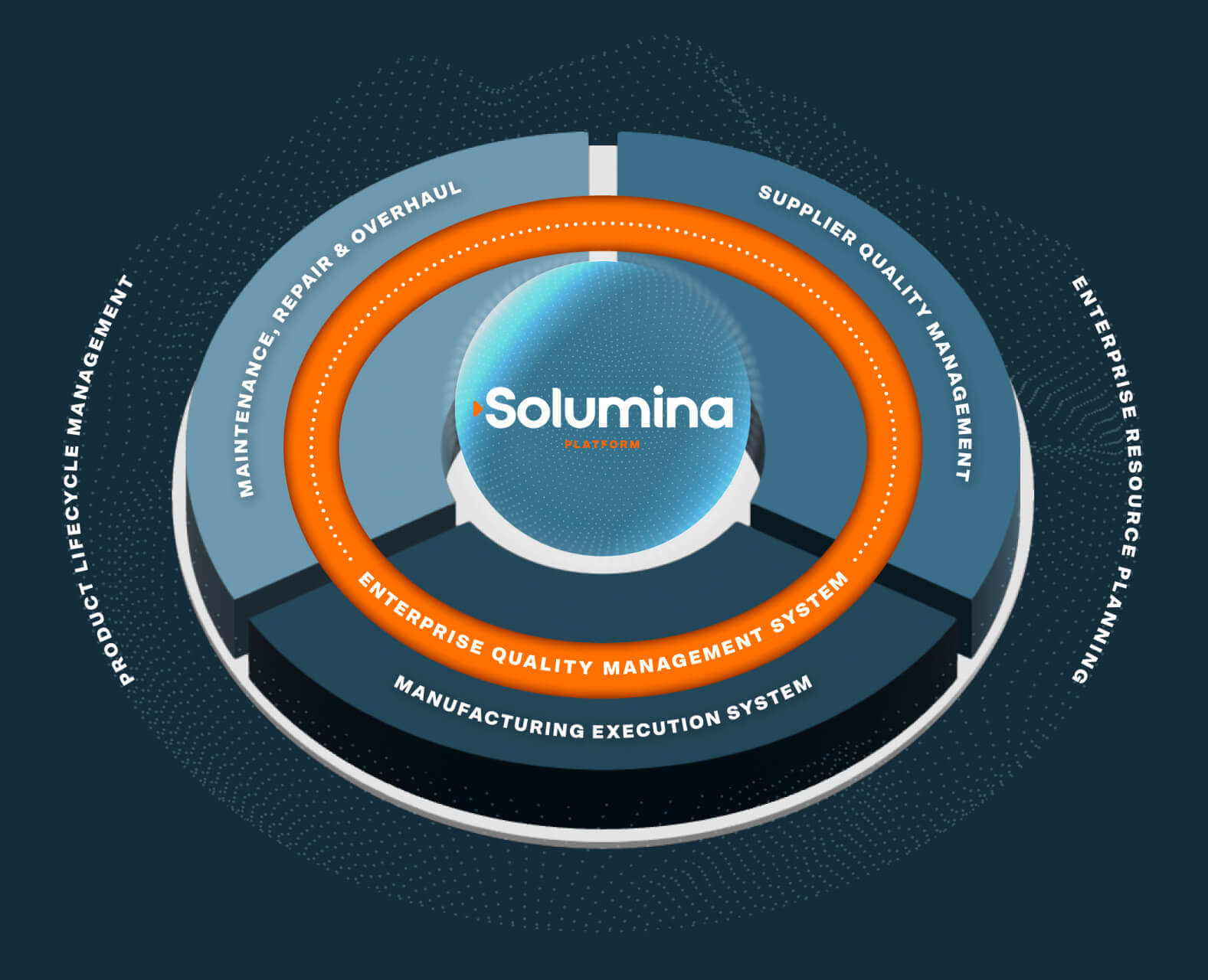
Instead, he positions Solumina as a Manufacturing Operations Management (MOM) platform—a system designed to unify multiple layers of manufacturing into a single, connected framework.
At its core, Solumina brings together four key components:
-
MES (Manufacturing Execution System): The operational engine managing workflows, instructions, data collection, and real-time process control
-
eQMS (Electronic Quality Management System): Built directly into operations to ensure compliance and traceability
-
MRO (Maintenance, Repair, and Overhaul): Essential for industries where maintenance failures can have severe consequences
-
Unified Data Model: The foundation that connects everything and enables advanced analytics and AI
Together, these elements form what Sung describes as a digital backbone, linking engineering design with real-world execution and long-term maintenance.
Designed for High-Stakes Industries
Solumina is built for environments where precision and reliability are non-negotiable. Industries like aerospace and defense require strict compliance, full traceability, and the ability to manage constant change without failure.
In such settings, Solumina acts as a system of record—a mission-critical platform that organizations depend on to keep operations running smoothly.
Rather than functioning as a standalone tool, it operates as a central nervous system for manufacturing, ensuring that every process aligns with both regulatory requirements and operational goals.
The Power of a Unified Data Model
One of the platform’s most important features is its unified data model.
This model connects all aspects of manufacturing—from execution data to analytics tools—enabling businesses to extract meaningful insights. It also plays a crucial role in powering AI and business intelligence systems.
As highlighted in the discussion, data alone isn’t enough. What matters is contextualized data. Without it, even advanced AI tools can produce inaccurate or incomplete results.
Over time, this ability to structure and contextualize data is expected to become a defining capability for modern manufacturing platforms.
Integration Across the Enterprise
Solumina doesn’t operate in isolation. It typically integrates with:
-
PLM systems for engineering and design data
-
ERP systems for materials, supply chain, and financial data
-
IoT and automation tools for real-time operational insights
A key differentiator is its bidirectional integration. Data doesn’t just flow from design to production—it also flows back, allowing real-world execution insights to influence future engineering decisions.
A Phased Approach to Implementation
Successful adoption of Solumina usually follows a step-by-step process:
-
Stabilizing core operations and ensuring data accuracy
-
Expanding integrations across systems
-
Enhancing insights through analytics and AI
This phased approach helps organizations manage complexity while gradually unlocking the platform’s full potential.
Evolution of the Platform
Solumina has continuously evolved alongside advancements in technology:
-
Initially built on a two-tier architecture
-
Later upgraded to a three-tier system
-
Now supports cloud-native deployment and microservices architecture
This flexibility allows companies to choose how they deploy the platform—whether on-premise or in the cloud—without being forced into a single model.
Beyond Technology: Capturing Institutional Knowledge
Sung Kim emphasizes that Solumina is more than just software—it represents codified knowledge of complex manufacturing processes.
Its purpose is to make highly intricate operations:
-
Predictable
-
Compliant
-
Scalable
In industries where mistakes are costly—or even catastrophic—this level of control and reliability is essential.
Final Thoughts
Solumina is redefining how manufacturing systems are viewed. Rather than being just another enterprise tool, it functions as an operating system for manufacturing, connecting data, processes, and people into a unified ecosystem.
As manufacturing becomes increasingly data-driven and AI-enabled, platforms like Solumina will play a central role in helping organizations stay competitive in complex, high-stakes environments.

About Author
