From Code to Clarity: How Spec-Driven Development Brings Structure to AI-Assisted Engineering
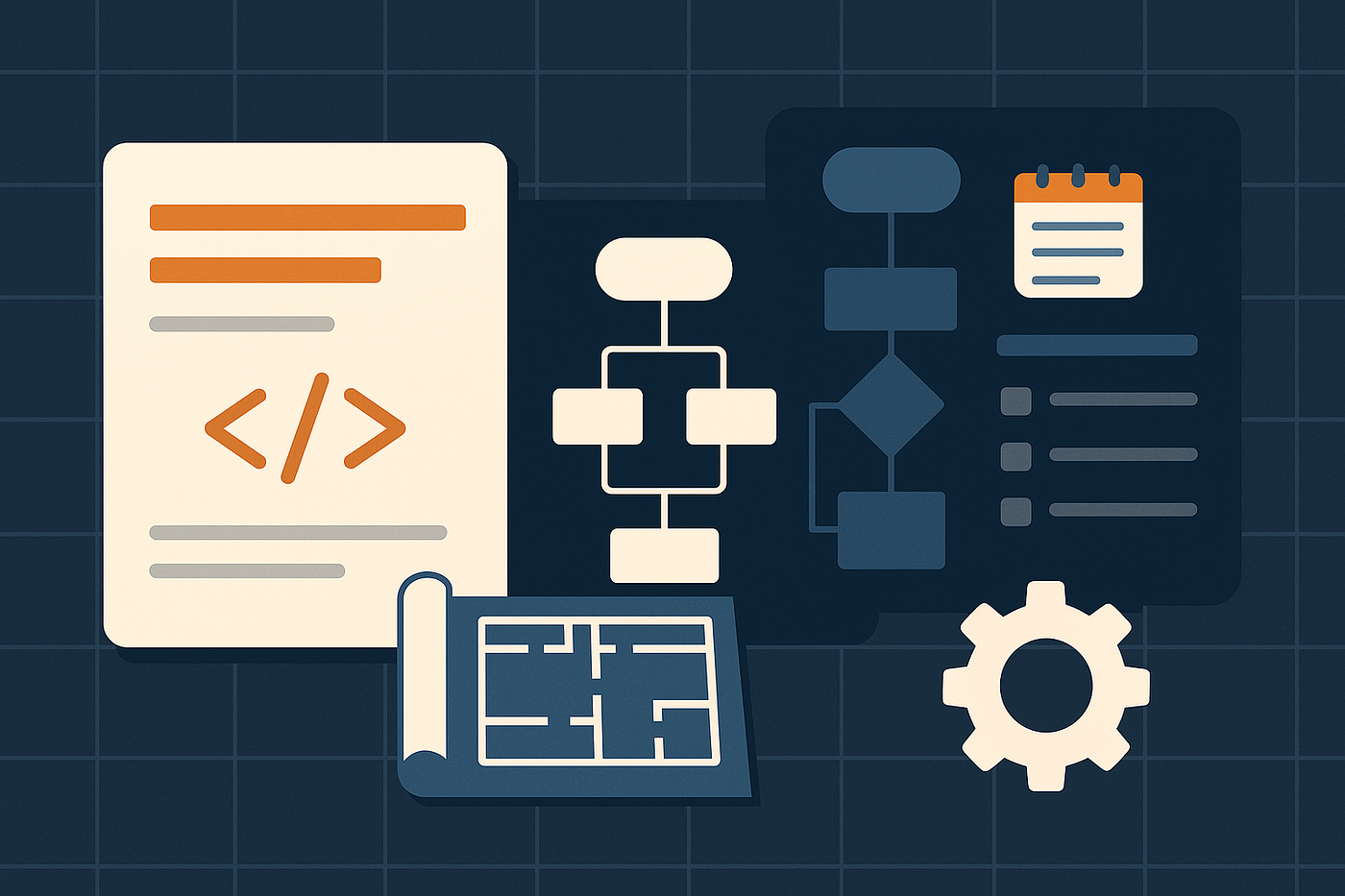
AI coding assistants have dramatically accelerated software development. Since the AI boom began, developers can generate entire features in minutes instead of days.
But speed has exposed a new problem: writing code is no longer the hardest part.
Building systems that are coherent, maintainable, and aligned with business intent is.
That’s where Spec-Driven Development (SDD) enters the picture.
Instead of relying on instinctive “vibe coding,” SDD uses structured specifications as the foundation for AI-assisted engineering. The result? Faster development — without sacrificing architecture or long-term stability.
Table of Contents
ToggleThe Problem with “Vibe Coding”
“Vibe coding” perfectly describes the current experimental phase of AI development:
You describe what you want.
The AI generates code.
If it compiles and looks reasonable, you move on.
For prototypes and scripts, this approach is powerful. It enables incredible velocity.
But for production systems, the cracks show quickly:
-
Architecture becomes an afterthought
-
New features introduce unexpected conflicts
-
Documentation is minimal or missing
-
Codebases grow into disconnected components
-
Maintenance becomes painful
The issue isn’t that AI writes bad code. It’s that the workflow lacks structure.
Developers often treat AI like a smarter search engine. In reality, it behaves more like an extremely capable but literal-minded pair programmer — one that needs clear, unambiguous instructions.
What Is Spec-Driven Development?
Spec-Driven Development flips the order of operations.
Instead of generating code first and refining later, SDD requires writing clear, structured, and testable specifications before a single line of code is produced.
In AI-assisted engineering, the specification becomes:
-
The blueprint
-
The contract
-
The shared source of truth
Unlike traditional requirement documents that sit unused, an SDD spec is actionable and living. It guides development, testing, documentation, and validation.
By pushing clarity and constraints upstream, SDD eliminates guesswork and ensures the AI generates code aligned with business goals and architectural standards.
How Spec-Driven Development Works
SDD follows a structured, sequential workflow. Each phase produces a concrete artifact that feeds the next stage.
Specify (The “What” & “Why”)
Start with a high-level description of the product and its purpose.
The AI then generates a detailed functional specification focusing only on:
-
User journeys
-
Success criteria
-
Edge cases
Technical decisions are intentionally excluded. The goal is clarity of intent before discussing implementation.
Plan (The “How”)
With the functional spec finalized, you define:
-
Tech stack
-
Architecture
-
Constraints
-
Security requirements
The AI generates a technical plan covering system design, integration patterns, and architectural alignment.
This ensures generated code feels native to your system — not bolted on.
Tasks (Break It Down)
The AI decomposes the plan into small, actionable, testable tasks.
Instead of building everything at once, you get granular objectives like:
“Create a user registration endpoint that validates email format.”
This prevents the overwhelming “big bang” generation approach.
Implement (Execute in Pieces)
The AI completes tasks one by one.
Developers review focused changes instead of massive, thousand-line code dumps. Each change is verifiable against the original specification.
Tools Supporting the SDD Approach
The SDD ecosystem is rapidly evolving. Different tools interpret the methodology in unique ways.
Spec Kit
An open-source CLI toolkit that integrates with assistants like Copilot, Claude Code, and Gemini CLI. It introduces a constitution.md file — a document encoding immutable project principles such as stack versions, naming conventions, and architectural patterns.
Kiro
An AI-driven IDE and CLI environment with SDD built into its core. It automatically generates requirements, design documents, and task lists, offering a structured, opinionated workflow.
BMAD Method
An open-source framework simulating a full agile team using AI agents — including roles like Product Manager, Architect, and Scrum Master — to manage the project lifecycle collaboratively.
Putting Spec Kit to the Test: XB Software’s Experience
Theory is helpful. Practice reveals the truth.
At XB Software, our team tested GitHub’s Spec Kit by attempting to recreate a small fleet management dashboard featuring:
-
A scheduler
-
A map
-
Vehicle data tables
Attempt #1: Build Everything at Once
We fed a high-level description into /specify and tried generating the full demo app in one pass.
The result?
-
Broken filters
-
Random data in statistics
-
A distorted scheduler
-
Layout inconsistencies
The model lost track of earlier requirements. Context overload caused coherence to collapse.
Lesson learned: Decomposition is essential.
AI models have finite context windows. Large, multi-page applications overwhelm them.
Attempt #2: Feature-by-Feature Development
We shifted strategy.
First: Generate the core layout (header and collapsible menu) using a detailed spec.
Next: Build the “Vehicles” page with precise layout instructions.
Finally: Add a small feature — client-side sorting for two table columns.
The results improved dramatically.
Minor cosmetic inconsistencies (like button colors) were easy to correct.
Each chunk of code was manageable, testable, and aligned with expectations.
The takeaway?
Specifications must match the size of the task.
When Spec-Driven Development Makes the Most Sense
SDD isn’t necessary for every script or quick prototype. But it’s invaluable in scenarios like:
Enterprise Systems
Long-lived applications requiring maintainability and compliance.
Complex Architectures
Multi-service systems with APIs and integrations.
Team Environments
Where multiple developers and AI agents collaborate.
Legacy Modernization
Capturing business logic in a modern spec before regenerating clean code.
The Bigger Shift: From Code-Centric to Spec-Centric Thinking
We are entering a new paradigm.
For decades, code was the source of truth.
Now, intent is the source of truth.
AI transforms specifications into executable artifacts. That changes how software is built.
Spec-Driven Development enables:
-
Small teams to ship enterprise-grade systems
-
Large organizations to move faster without losing coherence
-
AI-assisted development without architectural chaos
The future isn’t about generating more code.
It’s about generating the right code — guided by clear intent.
If you’re exploring AI-assisted engineering and want structure without sacrificing speed, now is the time to rethink your workflow.
Because in an AI-first world, clarity isn’t optional — it’s your competitive advantage.

About Author
